Cat litter box basics
How many litter boxes you need, the right size, litter and location, how often to clean, and when a litter problem means a trip to the vet.
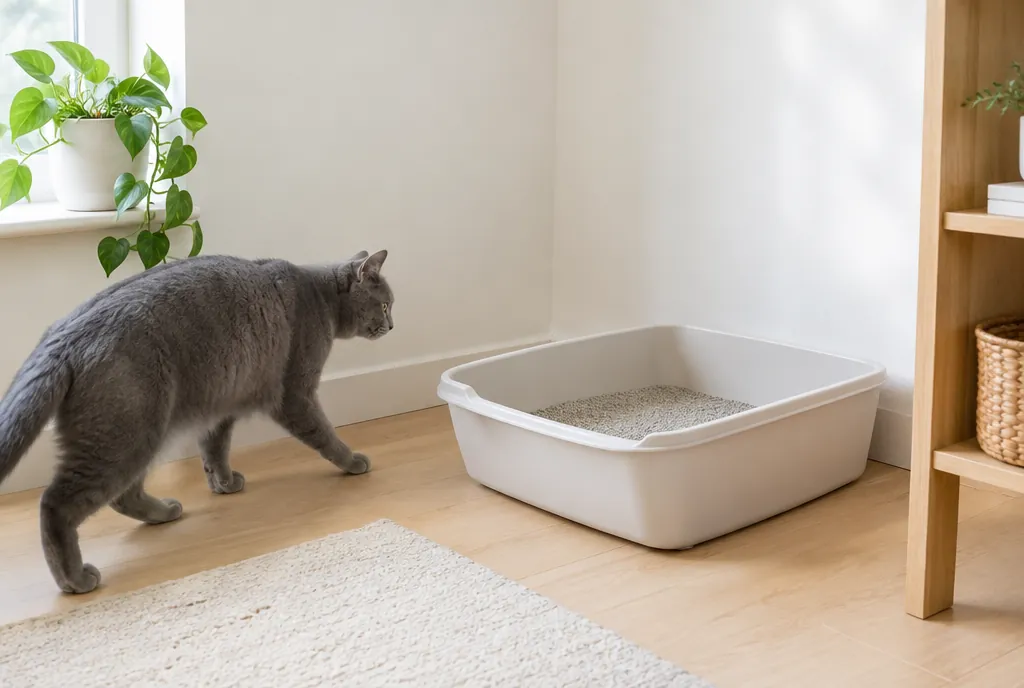
A litter box set up the way your cat likes is one of the simplest ways to prevent toilet problems. The guidance below comes from International Cat Care (iCatCare), the Merck Veterinary Manual and a published study on box preferences.
Emergency first: a cat that strains in the litter box needs a vet urgently. The Merck Veterinary Manual warns that this can be life-threatening, especially in male cats.
How many boxes?
One per cat, plus at least one extra. Two cats need three boxes. Spread them around the home rather than lining them up in one spot, so a cat always has a choice. In a home with several floors, put a box on each floor (Merck Veterinary Manual, iCatCare).
How big?
iCatCare suggests a tray about 1.5 times the length of your cat, measured from nose to the base of the tail. Many standard trays sold in shops are smaller than that.
Which litter?
- Fine, sand-like, clumping litter is what most cats prefer (iCatCare, Merck).
- Unscented is the safer choice. Cats are sensitive to smell, and strongly scented litters and deodorants can put them off (Merck, iCatCare).
- Use a layer about 3 cm deep (iCatCare).
Covered or uncovered?
Many articles say cats hate covered boxes, but the evidence is mixed. In a 2013 study of 28 cats published in the Journal of Feline Medicine and Surgery, four cats preferred covered boxes, four preferred uncovered ones, and most had no preference, as long as the boxes were scooped every day. iCatCare's advice is practical: offer both and see which one your cat uses, and remove any flap on a covered box.
Where to put it
Choose a quiet, low-traffic spot away from food and water bowls and away from noisy appliances such as washing machines (iCatCare, Merck).
Cleaning routine
| Task | How often |
|---|---|
| Scoop out clumps and waste | At least daily; iCatCare suggests twice a day |
| Empty, wash and refill (clumping litter) | Every 2 to 4 weeks (iCatCare); Merck says at least weekly |
| Empty, wash and refill (non-clumping litter) | Weekly |
When you wash the tray, iCatCare warns against disinfectants that turn cloudy in water, such as Dettol, because they are toxic to cats.
When a litter problem means a vet visit
Going outside the box is often a sign that something is wrong, not bad behavior. iCatCare lists medical causes including urinary disease, stress-related cystitis, diabetes, hyperthyroidism and arthritis. Book a vet appointment if your cat:
- starts going outside the box
- strains in the box (urgent)
Never punish a cat for accidents. It adds stress and makes the problem worse (iCatCare).
Sources
- International Cat Care. Choosing a litter tray for your cat
- International Cat Care. Soiling indoors
- Merck Veterinary Manual. Providing a Litter Box for a Cat
- Grigg EK, Pick L, Nibblett B. Litter box preference in domestic cats: covered versus uncovered. Journal of Feline Medicine and Surgery, 2013.
Frequently asked questions
How many litter boxes do I need?
One per cat plus at least one extra, spread around the home rather than side by side, according to International Cat Care and the Merck Veterinary Manual.
Do cats prefer covered or uncovered litter boxes?
It depends on the cat. In a 2013 study of 28 cats, most had no preference as long as boxes were scooped daily. International Cat Care suggests offering both and watching what your cat uses.
How often should I scoop the litter box?
At least once a day. International Cat Care suggests twice a day, with a full clean every two to four weeks for clumping litter or weekly for non-clumping litter.
Why is my cat peeing outside the litter box?
It can be a sign of illness, such as urinary disease, stress-related cystitis, diabetes, hyperthyroidism or arthritis, so book a vet visit. A cat straining in the box can be an emergency, especially a male cat.
Keep reading
More in Care →-
Training
How to introduce a cat and a dog
A calm, step-by-step plan for introducing a cat and a dog: separate spaces, scent swapping, barrier and leashed meetings, and the stress signs that mean slow down.
-
Care
How to brush your dog's teeth
A step-by-step plan to get your dog used to tooth brushing, how often to do it, which toothpaste is safe, and how to spot products with the VOHC seal.
-
Cats
Why does my cat follow me?
Discover the most common reasons cats follow their humans, what the research on cat attachment says, and when clinginess is worth a vet visit.