Choosing the right dog harness
A complete guide to harness types, key features and how to measure and fit one, so you can find the best harness for your dog.
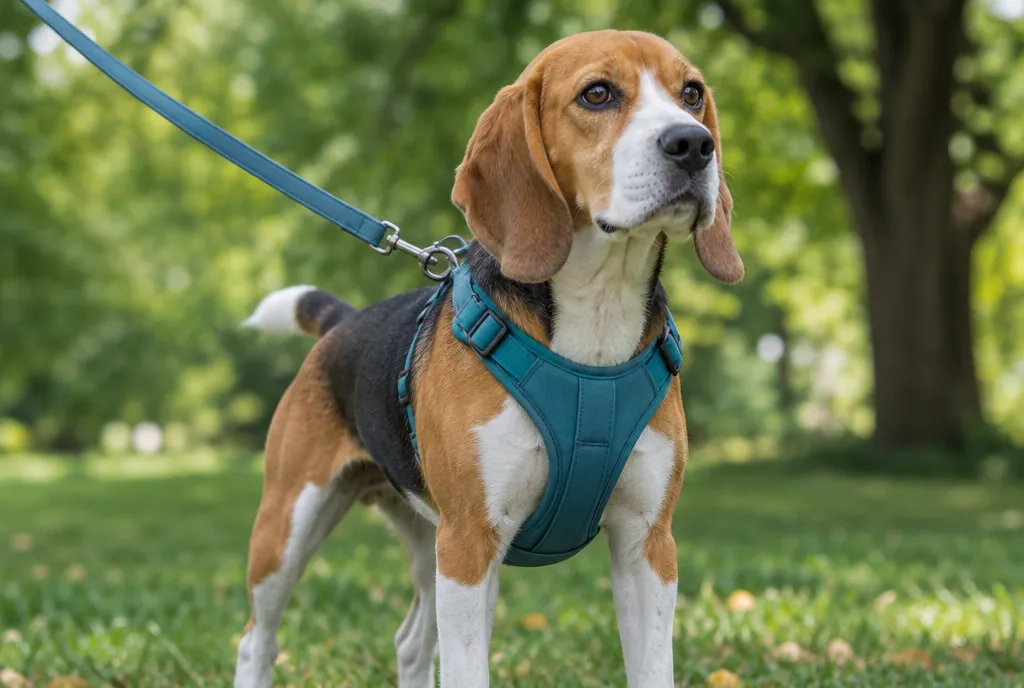
A good harness makes walks safer and more comfortable for you and your dog. The right one depends on how your dog walks, their body shape and what you need it to do. This guide compares the main types, explains how to measure and fit a harness, and covers what the research does and doesn't tell us. We don't rank brands or publish product scores here; the goal is to help you judge any harness yourself.
Harness or collar?
VCA Animal Hospitals notes that a harness lowers the risk of neck injury when a dog pulls, and calls it "probably your best starting tool for leash training". A flat collar is still handy for holding ID tags. The AKC adds that harnesses are especially useful for:
- breeds that slip out of collars, such as Bulldogs, French Bulldogs and Pugs
- older dogs
- dogs with neck pain, breathing problems or heart disease
Harness types compared
| Type | Where the leash clips | Best for | Watch out for |
|---|---|---|---|
| Front-clip | Chest | Dogs that pull: forward pulling turns the dog back toward you | Needs a good fit so it doesn't twist to one side |
| Back-clip | Between the shoulder blades | Calm, well-trained walkers; flat-faced breeds and dogs with sensitive backs, such as Dachshunds | Some dogs find it easier to pull |
| Dual-clip | Chest and back | Starting on the front clip, then moving to the back clip as walking improves | Slightly more straps to adjust |
The descriptions above follow AKC and VCA guidance.
What the research says about shoulder movement
You will often read that "Y-shaped" harnesses are better for a dog's shoulders than "straight-front" ones. The evidence is thinner than that claim suggests. In a 2019 study published in Veterinary Record, researchers measured nine dogs walking and trotting on a treadmill. Both harnesses they tested reduced shoulder extension compared with no harness, and the one described as non-restrictive actually reduced it more than the restrictive one. The authors concluded that harnesses do limit movement, "perhaps not in the way originally anticipated".
Nine dogs is a small study, so treat this as a reason to focus on fit rather than labels. Dogs Trust's practical advice is to avoid harnesses with a strap running across the front of the shoulders, which restricts natural movement.
How to measure your dog
Use a soft tape measure and take two measurements (AKC):
- Neck: around the base of the neck, where the neck meets the shoulders.
- Chest (girth): around the widest part of the chest, usually just behind the front legs.
Compare both numbers with the maker's size chart. If your dog falls between sizes, check whether the harness has enough adjustment at the neck and chest.
How to check the fit
- Snug, not tight. The AKC's veterinary expert says the familiar two-finger rule may leave the harness slightly too loose: you should have to squeeze two fingers under the straps.
- No shifting. Dogs Trust says the harness shouldn't move around as your dog walks, and your dog shouldn't be able to back out of it.
- No rubbing. Check under the front legs and behind the elbows after the first few walks.
- Re-check as your dog grows or changes weight.
Help your dog get used to it
Dogs Trust recommends introducing a harness gradually: let your dog sniff it, reward them, slip it on for a moment, then build up. If your dog struggles, go back a step. A harness your dog is happy to wear is worth more than any feature on the box.
Quick checklist before you buy
- Front-clip or dual-clip if your dog pulls
- Straps that sit clear of the shoulder joints
- Adjustable at the neck and chest
- Measured neck and chest, checked against the size chart
- A flat collar or tag holder for ID
Sources
- AKC. How to Find the Right Dog Harness for Your Dog
- VCA Animal Hospitals. Collar vs. harness
- Dogs Trust. Teach Your Dog To Wear A Harness
- Lafuente MP, Provis L, Schmalz EA. Effects of restrictive and non-restrictive harnesses on shoulder extension in dogs at walk and trot. Veterinary Record, 2019.
Frequently asked questions
Is a harness better than a collar?
For walking, often yes. VCA notes that a harness lowers the risk of neck injury when a dog pulls and calls it probably the best starting tool for leash training. A flat collar is still useful for holding ID tags.
Which harness is best for a dog that pulls?
A front-clip harness. When the dog pulls, the front attachment turns them back toward you, according to the AKC and VCA.
How tight should a dog harness be?
Snug but not tight. The AKC's veterinary expert says you should have to squeeze two fingers under the straps, and Dogs Trust adds that the harness shouldn't shift as your dog moves.
Are Y-front harnesses better for a dog's shoulders?
The evidence is limited. A small 2019 study of nine dogs found that both harness designs it tested reduced shoulder extension, and the one marketed as non-restrictive reduced it more. Look for a good fit and straps that sit clear of the shoulder joints.
Keep reading
More in Gear →-
Training
A simple puppy routine
A practical, easy-to-follow daily routine to help your puppy feel secure, learn faster and thrive, with potty breaks, naps, meals and short training sessions.
-
Training
How to introduce a cat and a dog
A calm, step-by-step plan for introducing a cat and a dog: separate spaces, scent swapping, barrier and leashed meetings, and the stress signs that mean slow down.
-
Care
How to brush your dog's teeth
A step-by-step plan to get your dog used to tooth brushing, how often to do it, which toothpaste is safe, and how to spot products with the VOHC seal.