Foods that are toxic to dogs
Chocolate, grapes, onions, xylitol and more: the everyday foods that can poison dogs, the signs to watch for, and exactly what to do if your dog eats one.
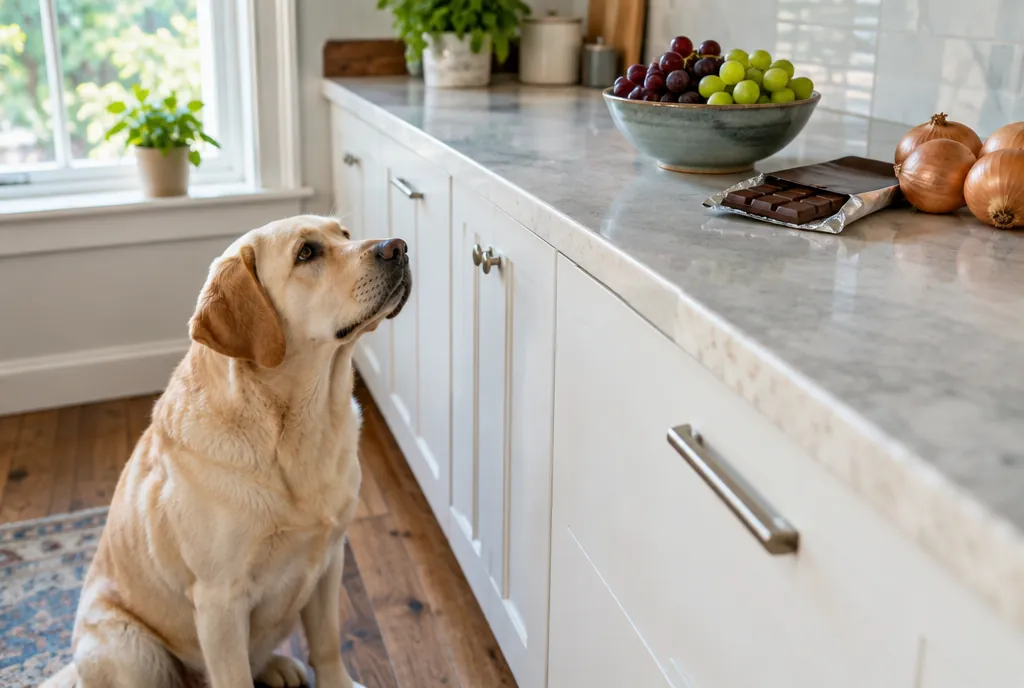
Some of the most common foods in our kitchens can make dogs seriously ill. This guide covers the ones the ASPCA, the US Food and Drug Administration (FDA) and the Merck Veterinary Manual warn about most, and what to do if your dog gets into one. If your dog has already eaten something on this list, stop reading and call for help now (numbers below).
If your dog ate something toxic
Call right away, even if your dog seems fine. Some poisonings don't show signs for hours. Any of these can help:
- Your veterinarian or nearest emergency clinic
- ASPCA Animal Poison Control: (888) 426-4435, open 24/7, 365 days a year (a consultation fee may apply)
- Pet Poison Helpline: (855) 764-7661, open 24/7 (a fee may apply)
Have the details ready: what your dog ate, roughly how much, when, and your dog's weight. Keep the packaging.
The foods to keep out of reach
Chocolate, coffee and caffeine
These contain methylxanthines, which can cause vomiting, diarrhea, seizures and, in serious cases, death. The darker the chocolate, the more dangerous it is. Baking chocolate and cocoa powder are the worst (ASPCA).
Grapes and raisins
They can cause kidney damage in dogs; tartaric acid is the suspected toxin. Vomiting or diarrhea often starts within 6 to 12 hours, and kidney failure can follow within a few days. No safe amount has been established, and reactions are unpredictable (Merck Veterinary Manual). That includes raisins in bread, cereal bars and trail mix.
Onions, garlic and chives
Members of the allium family irritate the gut and can damage red blood cells, leading to anemia. Cats are more sensitive, but dogs are at risk too (ASPCA). Watch for powders and cooked dishes, not just raw onions.
Xylitol (birch sugar)
This sugar substitute can trigger a large release of insulin in dogs and a rapid drop in blood sugar, often within 10 to 60 minutes. Signs include vomiting, weakness, staggering, collapse and seizures, and serious effects can be delayed by 12 to 24 hours (FDA). The ASPCA also warns of possible liver damage.
The FDA lists these common sources:
- sugar-free gum and candy
- baked goods
- chewable vitamins
- toothpaste and mouthwash
- some nut butters
Macadamia nuts
They can cause weakness, wobbliness, depression, vomiting, tremors and overheating, usually within 12 hours. Dogs typically recover in 24 to 72 hours (ASPCA), but you should still call your vet.
Alcohol
Dogs absorb alcohol quickly. It can cause vomiting, poor coordination, breathing problems, coma and death (ASPCA). Keep drinks, and foods made with alcohol, out of reach.
Quick reference
| Food | Main risk | Act how fast? |
|---|---|---|
| Chocolate, coffee, caffeine | Vomiting, diarrhea, seizures | Call now |
| Grapes and raisins | Kidney damage | Call now, any amount |
| Onions, garlic, chives | Damage to red blood cells | Call now |
| Xylitol | Low blood sugar, liver damage | Call now, emergency |
| Macadamia nuts | Weakness, tremors, overheating | Call now |
| Alcohol | Poor coordination, breathing problems | Call now |
This list isn't complete. If you aren't sure whether something is safe, ask your vet or a poison line before your dog eats it.
Prevention tips
- Store chocolate, nuts, dried fruit and sugar-free products in closed cupboards.
- Check labels for "xylitol" or "birch sugar", especially on peanut butter you use for treats.
- Keep bags, pockets and handbags off the floor: gum and mints are a common source of xylitol.
- Tell visitors and children not to share their food.
Sources
- ASPCA. People Foods to Avoid Feeding Your Pets
- ASPCA. Animal Poison Control
- US Food and Drug Administration. Paws Off Xylitol; It's Dangerous for Dogs
- Merck Veterinary Manual. Grape, Raisin, and Tamarind Toxicosis in Dogs
- Pet Poison Helpline. petpoisonhelpline.com
Frequently asked questions
How many grapes are toxic to a dog?
No safe amount has been established. The Merck Veterinary Manual notes that reactions are unpredictable, so any grapes or raisins should be treated as a reason to call your vet.
What should I do if my dog ate chocolate?
Call your veterinarian, an emergency clinic or a pet poison line straight away, even if your dog seems fine. Dark chocolate, baking chocolate and cocoa powder are the most dangerous.
What is xylitol and where is it found?
Xylitol is a sugar substitute, sometimes labelled birch sugar. The FDA lists sugar-free gum and candy, baked goods, chewable vitamins, toothpaste, mouthwash and some nut butters among the products that can contain it.
What is the ASPCA poison control number?
ASPCA Animal Poison Control is (888) 426-4435, open 24 hours a day, 365 days a year. A consultation fee may apply.
Keep reading
More in Nutrition →-
Training
A simple puppy routine
A practical, easy-to-follow daily routine to help your puppy feel secure, learn faster and thrive, with potty breaks, naps, meals and short training sessions.
-
Training
How to introduce a cat and a dog
A calm, step-by-step plan for introducing a cat and a dog: separate spaces, scent swapping, barrier and leashed meetings, and the stress signs that mean slow down.
-
Care
How to brush your dog's teeth
A step-by-step plan to get your dog used to tooth brushing, how often to do it, which toothpaste is safe, and how to spot products with the VOHC seal.